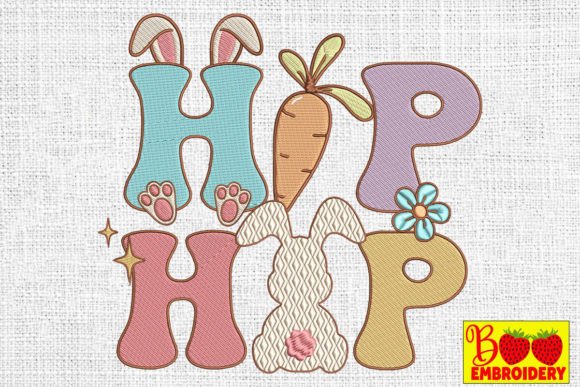
Funny Easter Hip Hop
First Impression: Bold, Playful, and Instantly Memorable
As an embroidery designer who’s prepped over 200 craft fair booths, I can tell you Funny Easter Hip Hop lands with personality—right out of the digital file. The title alone signals irreverent charm: it’s not pastel bunnies or delicate eggs. It’s Easter with attitude. That contrast—festive holiday + modern rhythm—is exactly what cuts through visual noise at a busy market. Customers scanning your table won’t pause for “cute.” They’ll stop for *character*. And Funny Easter Hip Hop delivers that in spades: bold enough for signage, clever enough for conversation, and fresh enough to feel like a small rebellion against cookie-cutter seasonal decor.
Where It Shines: Craft Fair Product Pairings
This machine embroidery design thrives where handmade meets humor—and utility. On a heavyweight cotton tote bag? Perfect. The scale reads clearly from six feet away, and the playful vibe aligns with shoppers looking for giftable, Instagrammable items. As apron embroidery, it adds cheeky warmth to kitchen-focused booths—especially on denim or canvas aprons where stitch definition stays crisp. For tea towel embroidery, position it near the hem or corner: the design’s energy lifts a functional item into a statement piece without overwhelming absorbency or fold lines.
Funny Easter Hip Hop also excels as an embroidered patch. Stitch it cleanly on twill or felt, back it with iron-on adhesive, and sell it as a standalone product—or let customers sew it onto jackets, backpacks, or market bags. On caps? Use it on the front panel only if the file includes clean, low-profile stitching (test first!). On curved surfaces, dense lettering or tight motifs can distort—so prioritize versions with open spacing and moderate stitch density.
Small-format items—fabric pouches, pillow covers, and mini market bags—benefit most when Funny Easter Hip Hop is scaled to 3–4 inches wide. Too large, and it crowds the surface; too small, and punchlines get lost. As a handmade product, it elevates perceived value: buyers associate clever embroidery with intentional craftsmanship—not mass production.
Real-World Production Notes Every Designer Should Check
Before loading Funny Easter Hip Hop into your hoop, run these practical checks:
- Test on scrap fabric matching your final product—especially textured towels or thick canvas. What looks sharp on screen may blur on terry cloth.
- Review thread colors in natural light. Easter palettes often lean pastel—but contrast matters more than hue. A bright yellow outline on navy fabric reads stronger than pale pink on white.
- Confirm hoop size and spacing. If the design pushes 5x7” limits, it may require re-hooping mid-stitch on smaller machines—slowing batch production.
- Inspect stitch density. High-density fills look lush on satin but risk puckering on lightweight cotton. Adjust underlay or reduce fill % if needed.
- Use the right stabilizer: cutaway for knits, tear-away for stable wovens, and heavy-duty for towels. Skipping this step turns charm into frustration.
- Create at least one real mockup—not just a printable mockup. Drape it on your actual tote or apron. Does it sit flat? Does the flow match the garment’s grain?
- Compare fabric colors side-by-side. A design that pops on ivory may vanish on oatmeal linen.
- Confirm commercial licensing before selling finished products. This is non-negotiable for Etsy sellers and boutique makers.
Careful-Use Considerations: Protect Your Time and Reputation
Funny Easter Hip Hop isn’t built for every surface. Avoid it on ultra-dark fabrics unless thread contrast is verified—it’s easy to assume “white thread = visible,” but halftones and fine outlines disappear fast. Skip curved cap crowns if the file contains tiny details or tight kerning; those letters will stretch and misalign. Likewise, steer clear of dense stitch areas on terrycloth towels—stitch buildup traps moisture and weakens durability. And never scale it below 2.5 inches without testing: small lettering blurs, and hip-hop motifs rely on rhythmic clarity.
Why It Moves Product—Not Just Thread
In a sea of Easter embroidery, Funny Easter Hip Hop stands out because it serves two audiences at once: adults who appreciate wit, and gift-givers seeking something joyful but not juvenile. At craft fairs, it sparks smiles, slows foot traffic, and invites questions—“What’s the story behind that?” That’s free marketing. Visually, it strengthens booth display strength by adding movement and voice to otherwise static items. It supports brand consistency for makers who blend tradition with edge. And for Etsy sellers, it performs well in search: “funny Easter embroidery” and “hip hop holiday design” are underserved long-tail terms with real buyer intent.
Final Verdict for Creative Entrepreneurs
If you’re curating a lineup of small shop products for spring markets, Funny Easter Hip Hop earns a top-tier slot—not as filler, but as a signature piece. It’s versatile across commercial embroidery applications, photogenic for online listings (especially with lifestyle mockups), and repeatable for batch production—if you honor its technical needs. It doesn’t ask for perfection; it asks for intention. Treat it like a collaborator: test it honestly, pair it thoughtfully, and let its personality amplify yours. Done right, Funny Easter Hip Hop won’t just sell—it’ll start conversations, build recognition, and remind customers why they love handmade.