Monsters Read on the Fly
A Playful, Professional Redwork Design Built for Small Business Merch
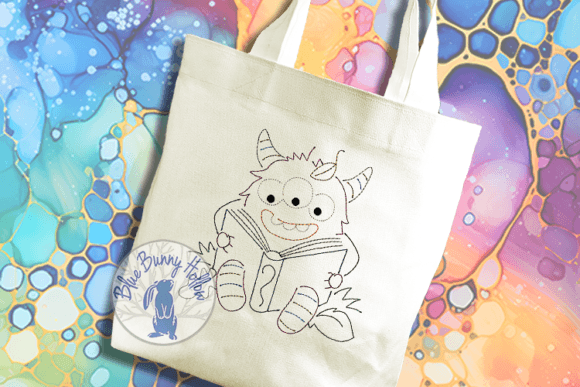
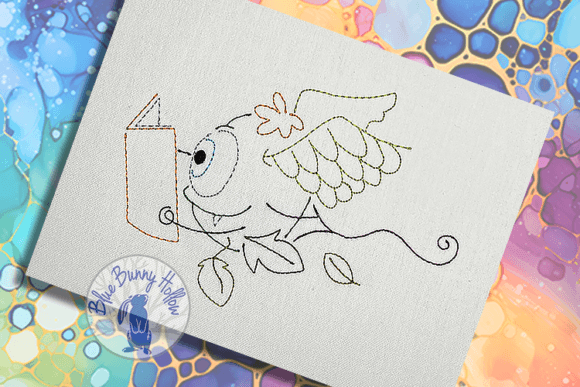
As an embroidery designer who’s digitized and stitched thousands of logos and illustrations for cafés, boutiques, studios, and handmade brands, my first impression of Monsters Read on the Fly is immediate: it’s warm, intentional, and commercially smart. The phrase “redwork embroidery design” in the description signals a clean, classic aesthetic—think hand-stitched charm with machine-ready precision. It’s not overly detailed or fussy; instead, it leans into expressive simplicity: a friendly monster, fully absorbed in a book. That balance of whimsy and clarity makes Monsters Read on the Fly feel both handmade and professional—ideal for small businesses that want to stand out without sacrificing polish.
Where This Design Shines in Real-World Business Use
Monsters Read on the Fly thrives where personality meets practicality. On embroidered patches—especially 2"–3" velcro-backed or sew-on versions—it reads clearly at arm’s length and holds visual weight on denim jackets, tote bags, or staff aprons. For cafés and bookish boutiques, it works beautifully as a chest accent on work shirts or a subtle sleeve detail on barista or florist uniforms. As cap embroidery, it lands well on structured front panels (think cotton twill or washed canvas), where its redwork-inspired outlines translate cleanly into stitch-defined shapes—not fuzzy or overfilled.
It also elevates everyday items with intention: imagine it stitched onto linen tea towels at a local bakery, heat-applied (via embroidery patch) onto reusable produce bags for a co-op, or centered on cotton canvas totes sold at a children’s bookstore. Because it’s rooted in storytelling—not just decoration—it builds emotional resonance. Customers don’t just see a monster; they recognize a shared value: curiosity, learning, quiet joy. That strengthens brand identity without saying a word.
Smart Placement & Practical Limits
Like any strong machine embroidery design, Monsters Read on the Fly performs best when matched to the right application—and respected where it has limits. Avoid shrinking it below 1.5" for embroidered patches or cap fronts: fine details like the monster’s expression or book spine may collapse or blur, especially on textured fabric like fleece or heavy duck canvas. Similarly, steer clear of high-curve surfaces (e.g., curved bill caps or rounded ceramic mugs with embroidered labels) unless you’ve tested the design’s outline integrity under tension.
Stitch density matters too. Redwork typically uses fewer fill stitches and more satin or stem-outline work—so Monsters Read on the Fly likely avoids heavy thread build-up. That’s great for durability on frequently washed items like aprons or staff uniforms. But always confirm: if the digital embroidery file includes dense fills or tiny interior lettering (“Read on the Fly” rendered as part of the image), those elements may need simplification for long-term wear.
How It Strengthens Your Brand Identity
In a sea of generic logos, Monsters Read on the Fly offers distinctiveness with warmth. It doesn’t scream “corporate”—it invites. That builds trust with families, educators, and creative communities. When used consistently across tote bag design, apron embroidery, and customer gift tags, it creates visual consistency while feeling human-scaled and approachable. For Etsy sellers and handmade product brands, that authenticity translates directly to buyer engagement: people connect with stories, not slogans.
Crucially, it supports perceived product value. A well-executed embroidered patch feels more substantial than a printed logo—more considered, more lasting. That tactile quality reinforces your commitment to quality, whether you’re selling artisanal cookies or curated children’s books. And because it’s rooted in literacy and imagination, it subtly positions your business as thoughtful, community-minded, and values-driven—without needing a mission statement stitched beside it.
Essential Embroidery Designer Notes Before Production
- Test in black and white first: Print a grayscale version to assess contrast and shape legibility—especially important if stitching on dark uniforms or navy tote bags.
- Check small-scale performance: Resize the digital embroidery file to 1.75" and run a test stitch on scrap fabric matching your final garment (e.g., poly-cotton blend for staff shirts).
- Review thread color contrast: Redwork traditionally uses red thread on natural fabrics—but consider high-contrast options (navy on ecru, charcoal on oatmeal) for broader versatility across your merch line.
- Inspect spacing and isolation: Ensure the monster and book aren’t so tightly grouped that stitches bleed together on low-thread-count fabrics.
- Confirm hoop size compatibility: Most redwork-style designs fit comfortably in a 4" x 4" hoop—but verify before batching orders for commercial embroidery.
- Use appropriate stabilizer: Tear-away works well for stable wovens (caps, tote bags); cut-away adds longevity for stretchy or lightweight fabrics (kids’ tees, apron ties).
- Create a printable mockup: Show clients how Monsters Read on the Fly looks on actual product shots—not just isolated design files—to secure faster approvals.
- Compare alongside other design assets: Does it harmonize with your existing logo, typography, or packaging? Consistency in line weight and energy matters.
- Verify commercial licensing: Since this is intended for small business merch and branded patch use, confirm the digital embroidery file includes rights for resale and promotional distribution.
Final Thought: More Than a Design—A Story You Can Stitch
Monsters Read on the Fly isn’t just another embroidery file—it’s a narrative tool. In the Games category, it hints at play and discovery; in Embroidery, it delivers craftsmanship and care. For small business owners building custom apparel, launching boutique merchandise, or designing staff uniforms, it’s a rare find: friendly enough for kids’ storytime events, refined enough for a curated gift shop, and flexible enough to scale across patches, caps, totes, and beyond. Treat it with intention—test, refine, and place it where it speaks loudest—and it won’t just decorate your products. It’ll deepen your connection with every customer who pauses, smiles, and thinks, “Yes. That’s exactly how reading feels.”