Blessed Mama, Mother’s Day
First Impressions: Warm, Timeless, and Thoughtfully Composed
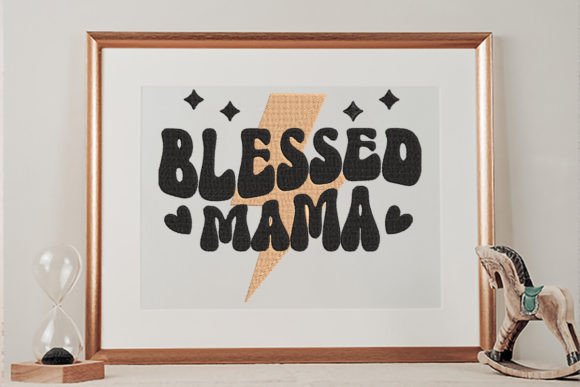
When I opened Blessed Mama, Mother’s Day for the first time, what struck me wasn’t just the sentiment—but the quiet confidence in its layout. It reads clearly at a glance, with balanced spacing between “Blessed Mama” and “Mother’s Day,” and a gentle, hand-lettered rhythm that avoids stiffness. There’s no excessive embellishment—no swirls competing with the words, no fussy flourishes that risk tangling on delicate fabrics. Instead, it leans into clean satin stitch outlines and soft fill areas that suggest warmth without sacrificing legibility. This isn’t a design shouting for attention; it’s one that settles comfortably into handmade products, like a well-worn apron or a favorite pillow cover.
A Real Project Test: Embroidering a Linen Tote for a Local Boutique
Last week, I used Blessed Mama, Mother’s Day to embroider a set of 100% linen tote bags for a small-town gift shop launching their spring Mother’s Day collection. We chose natural linen with ecru thread—not white, not cream, but something warm and grounded—and paired it with medium-weight cutaway stabilizer. The result? Crisp lettering, smooth satin edges, and zero puckering, even across the slightly nubby texture of the fabric. Customers responded immediately: “It feels like a hug,” one said. That’s the power of this design—it carries emotional weight without leaning on cliché. It works because it’s designed *for* real cloth, not just perfect digital previews.
Where It Shines (and Where to Pause)
Blessed Mama, Mother’s Day performs exceptionally well on mid-to-heavyweight fabrics: cotton twill for aprons, fleece-lined sweatshirts, canvas tote bags, and quilted pillow covers. Its moderate stitch density keeps things breathable on apparel while holding shape after washing. As a machine embroidery design, it transitions cleanly from flat surfaces (like tea towels or framed hoop art) to gently curved ones (think structured cap fronts or baby blanket corners), provided you use appropriate stabilizer support.
That said—exercise care on ultra-thin knits, stretchy jersey, or heavily textured bouclé. The letterforms are graceful but not oversized, so tiny hoops (under 4x4 inches) may compress detail or force awkward repositioning. If stitching on dark fabric, test contrast early: light thread can fade visually unless you add an underlay or adjust top tension. And while the design doesn’t include applique elements, avoid adding them mid-stitch unless you’ve confirmed the file allows for jump-thread pauses or color changes.
Design Integrity Meets Commercial Practicality
As someone who reviews embroidery files for craft businesses and Etsy sellers, I pay close attention to how a design supports brand consistency—and Blessed Mama, Mother’s Day delivers. It doesn’t compete with logos or patterns; it complements them. Whether stitched alone on a minimalist baby onesie or layered subtly beneath a boutique’s woven label on a linen napkin set, it reads as intentional, not decorative filler. That builds customer trust: people sense when a handmade product has been thought through, not just assembled.
For digital product sellers, this is strong design assets material. It scales well for printable mockups—clean lines hold up in grayscale, and its proportions translate reliably across product templates (tote bag mockups, sweatshirt flat lays, pillow cover renders). Just remember: if you’re bundling it as part of a commercial embroidery bundle or selling finished items, verify licensing terms before listing. Not all machine embroidery designs permit unlimited resale of physical goods.
Practical Designer Notes Before You Stitch
- Always test first—run Blessed Mama, Mother’s Day on scrap fabric matching your final project’s weight and weave.
- Check thread color contrast on both light and dark backgrounds. A single shade can read differently depending on fabric tone and sheen.
- Review stitch density—not too tight to cause stiffness on apparel, not too sparse to look unfinished on home goods.
- Confirm hoop size compatibility before digitizing or resizing. Some versions may assume standard 5x7 or larger.
- Inspect small details—especially inner curves and junctions where satin stitches meet. These areas reveal whether the file was optimized for real-world stitching.
- Try black-and-white mockups to assess visual weight and hierarchy without color distraction.
- Use proper stabilizer: cutaway for knits and stretchy items, tear-away for stable wovens, and fusible for lightweight linens.
- Verify dual-use suitability—does the file work equally well for personal keepsakes and commercial embroidery projects?
Final Thought: A Design That Earns Its Place
Blessed Mama, Mother’s Day isn’t flashy—but it doesn’t need to be. In a market saturated with overdesigned holiday embroidery files, it stands out by doing less, and doing it well. It fits naturally on personalized gifts, small shop merchandise, nursery decor, and custom apparel without demanding attention away from the person wearing or using it. For designers, crafters, and creative entrepreneurs, that kind of quiet reliability is rare—and valuable. It’s the kind of embroidery file you keep in your go-to folder, not your “maybe later” archive.