Patchwork Letter E
First Impressions: Sweet, Handmade, and Full of Quiet Charm
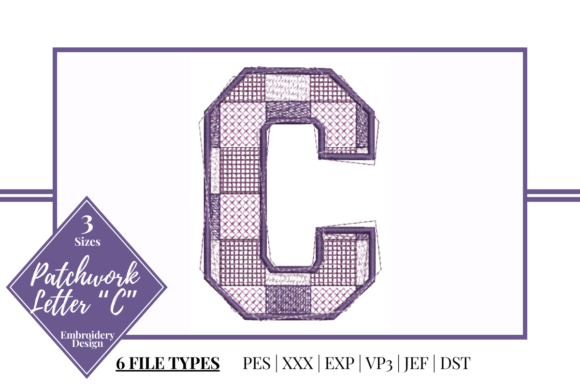
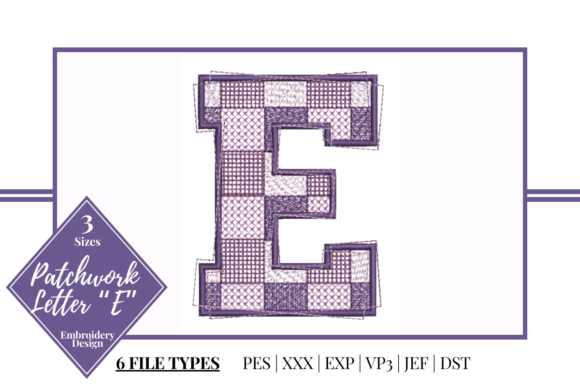
As an embroidery designer who’s tested hundreds of letter designs for personalized gift shops, the Patchwork Letter E immediately stands out—not with flash, but with warmth. It doesn’t shout; it invites. The design carries a gentle, hand-stitched sensibility—like something lovingly pieced together from vintage fabric swatches—but rendered cleanly in machine embroidery. Its mood is soft yet intentional: sweet without saccharine, elegant without stiffness, modern enough for a minimalist tote but classic enough for a heirloom baby blanket. There’s no harsh geometry or over-engineered detail—just balanced curves, thoughtful spacing, and subtle texture that reads as handmade, even at a glance.
Where Patchwork Letter E Truly Shines
This isn’t just another alphabet file—it’s a versatile anchor for meaningful personalization. I’ve already sketched how it would elevate real customer orders:
- Baby embroidery: Stitched on organic cotton receiving blankets or muslin nursery wall hangings, the Patchwork Letter E feels tender and timeless—perfect for a baby’s initial, especially when paired with a tiny embroidered star or leaf motif.
- Wedding gift: Imagine it centered on a linen pillow cover beside monogrammed initials, or subtly stitched along the hem of a custom tea towel gifted to the couple—romantic, refined, and quietly sentimental.
- Family keepsakes: On a quilt square or framed hoop art, it adds cohesion to a set of patchwork letters spelling a name or anniversary year—ideal for Etsy sellers offering coordinated nursery or milestone collections.
- Everyday handmade products: It works beautifully on kitchen towels (embroidered towel), aprons, canvas tote bags, and pillow covers—giving small shop products an elevated, boutique feel without demanding advanced digitizing skills.
- Custom order previews: Because its shape reads clearly at medium scale (3–4 inches tall), it photographs well in digital mockups—boosting buyer engagement before stitching begins.
Smart Placement: Where to Use It—and Where to Pause
The Patchwork Letter E excels on stable, medium-weight fabrics: linen, quilting cotton, twill, and midweight canvas. But like any thoughtful embroidery file, it asks for intentionality:
- Avoid ultra-small scaling: Below 2 inches, delicate interior seams and patchwork-style edges risk losing definition—especially on textured fabric or thick towels where stitch density may blur fine lines.
- Test carefully on stretchy or delicate substrates: Baby onesies or ribbed knit blankets need extra stabilizer and possibly reduced stitch density—review your embroidery file settings before committing to production runs.
- Dark fabric demands contrast checks: Since thread colors can be altered based on your Mac’s palette, always run a printable mockup *and* a physical test stitch on black or navy fabric to confirm legibility.
- Curved surfaces (like mugs or curved tote handles) require repositioning: The design’s flat, open structure doesn’t wrap naturally—best placed on flat panels unless you’re willing to split and adjust manually.
- Frequent-wash items need durability planning: For embroidered towels or baby blankets, pair the Patchwork Letter E with high-quality polyester thread and tear-away + cut-away stabilizer combo to preserve detail over time.
Why It Builds Trust—and Turns Browsers into Buyers
In my experience selling through Etsy and local craft fairs, customers don’t just buy letters—they buy meaning, craftsmanship, and emotional resonance. The Patchwork Letter E delivers that intuitively. Its handmade aesthetic signals care and attention long before the first stitch hits fabric. That perception lifts perceived value: a $28 embroidered towel feels like a curated gift, not mass-produced decor. It also strengthens customer trust—because when buyers see consistent, clean stitching on your product photography, they believe your entire process is precise and reliable.
For digital embroidery file sellers, this design is a quiet powerhouse. It pairs effortlessly with coordinating borders (fitting its natural category), and its flexibility means one file supports dozens of product types—from baby embroidery bundles to wedding gift sets. And because colors can be altered based on the embroidery thread colors put in your Mac, it adapts seamlessly to seasonal palettes or brand guidelines—no new files needed.
Practical Notes Every Embroiderer Should Run Before First Use
Before stitching your first Patchwork Letter E for a customer, treat it like a new collaborator—test, observe, refine:
- Always test on scrap fabric—same type, same stabilizer, same thread—as your final product.
- Check thread color contrast on both light and dark fabric swatches; subtle tonal shifts can disappear under camera lights.
- Confirm hoop size compatibility; if your machine requires re-hooping mid-design, note where seams fall and whether trimming will interrupt flow.
- Review stitch density—dense fills look rich on linens but may pucker thin cottons. Adjust if needed.
- Use appropriate stabilizer: lightweight cut-away for knits, tear-away for stable wovens, and fusible for delicate layers.
- Compare light/dark fabric mockups side-by-side—not just on screen, but stitched.
- Inspect small details post-stitch: corners, inner angles, and edge clarity matter most for giftability.
- Verify commercial licensing before selling finished products—this is essential for Etsy sellers, small shop owners, and baby product creators alike.
A Design That Grows With Your Shop
The Patchwork Letter E isn’t just a border or an embroidery file—it’s a quiet confidence-builder. It helps handmade sellers communicate quality without saying a word. It gives wedding gift designers a signature touch. It lets baby embroidery creators offer heirloom-ready personalization with ease. Whether you’re stitching for a single custom order or building a full Etsy collection, this design supports intention, emotion, and craftsmanship—all in one graceful, patchwork-inspired curve. And in a world of fast trends, that kind of thoughtful consistency? That’s what keeps customers coming back.